
- Get directions
- Call now
- Website
- Bookmark
- Share
- Leave a review
- Report
- prev
- next
About
Testing web services, validating signup forms, and managing multi-platform account registrations require a dependable method for processing authentication messages. When configuring test environments or auditing user onboarding flows, developers, quality assurance teams, and independent operators frequently run into delivery bottlenecks where confirmation links either arrive late or fail to appear entirely. Understanding the mechanics of email routing, server queues, and inbox filtering helps teams diagnose these registration snags quickly while keeping their primary business communication channels isolated from promotional spam.
In many modern signup sequences, encountering a verification email not received situation stems from multiple technical factors. Sending servers may implement greylisting, which temporarily defers emails from unfamiliar IP addresses. High-volume transactional mailers often experience queue backlogs during peak traffic periods, leading to latency that exceeds token expiration windows. Furthermore, aggressive automated filtering rules on conventional mail providers can divert legitimate verification notices into spam or quarantine folders without clear alerts. For routine software evaluations, sandbox trials, and automated form tests, relying on permanent corporate inboxes creates unnecessary clutter and increases security exposure.
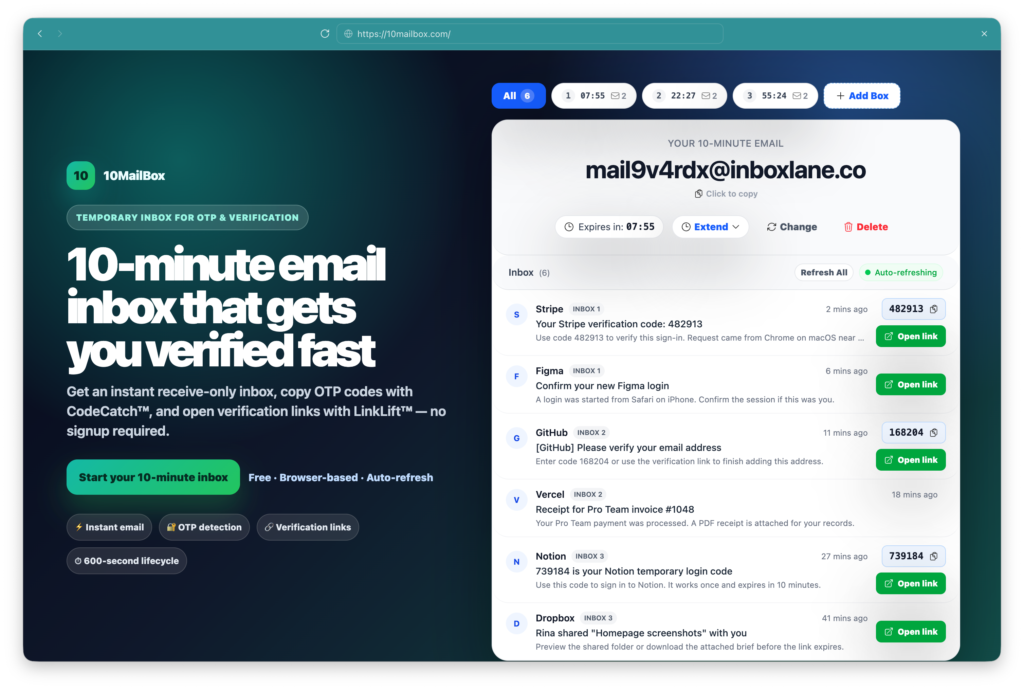
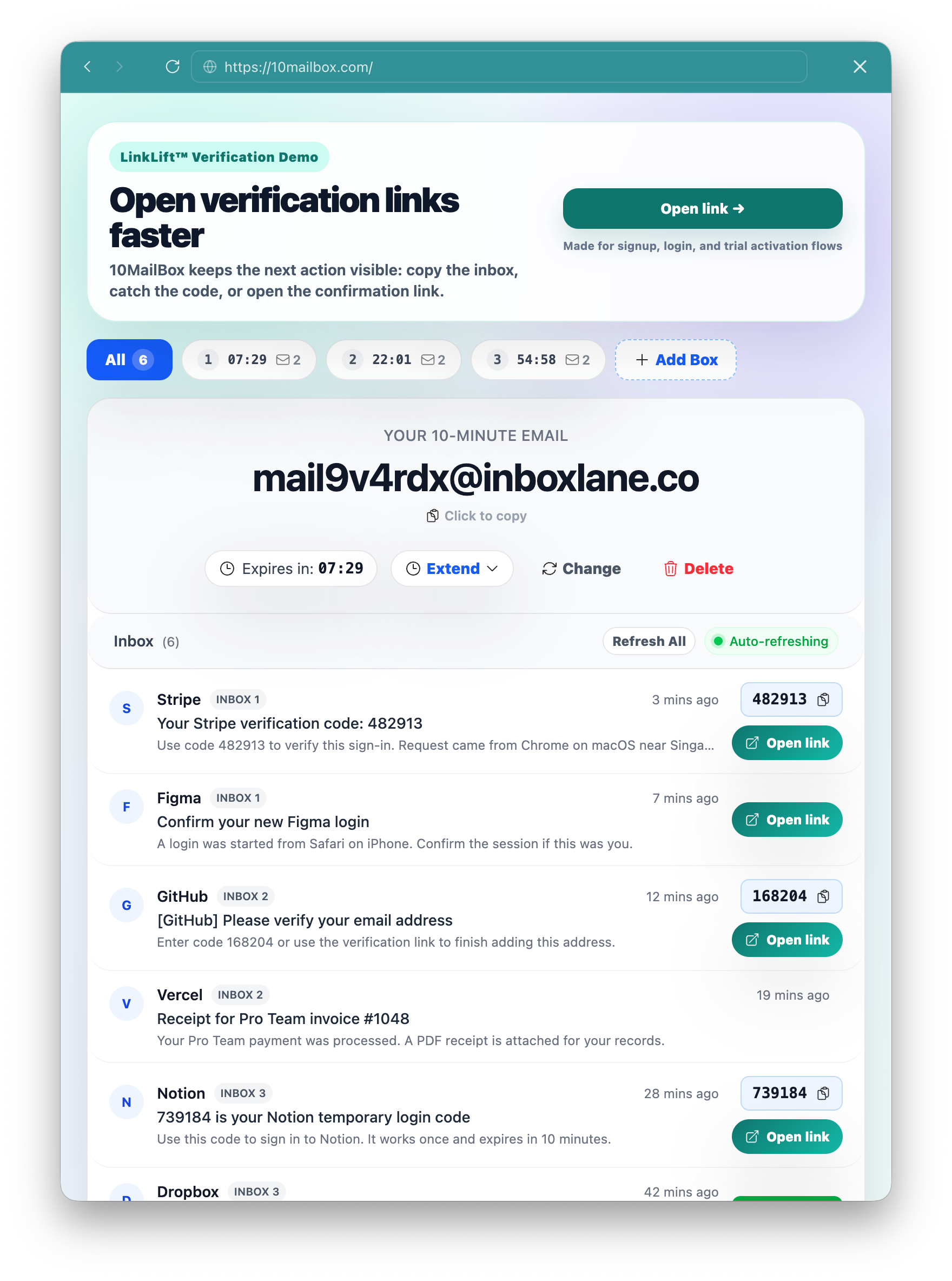
A practical alternative involves adopting a temporary email for verification during initial evaluation phases. Disposable inboxes provide an isolated, short-term destination designed specifically to catch incoming confirmation links and verification tokens. The standard operational routine is straightforward: open the mailbox generator, retrieve an active address, paste it into the target platform’s registration form, and submit the request. Once the sending application fires the automated authentication message, the incoming notification appears in the temporary interface. Because disposable inboxes generally operate on limited timeframes—such as ten minutes—reviewing and clicking the confirmation link promptly is necessary before the temporary session terminates.
This approach is equally valuable when benchmarking temporary email verification reliability across diverse web platforms. If an application requires a user to activate an account within a narrow window, verifying the delivery pipeline against a fast-response inbox highlights whether the service's notification infrastructure meets acceptable speed standards. Should confirmation links fail to land, teams can systematically test whether the issue lies in sender reputation, strict SPF/DKIM verification checks, or third-party email throttling.
To explore specific setup steps, token troubleshooting methods, and procedures for capturing confirmation links efficiently, technical users rely on specialized guides that outline temporary inbox protocols. These operational resources provide structured procedures on operating short-lived inboxes, resolving delivery bottlenecks, and navigating authentication hurdles during standard registration processes without maintenance overhead.
Establishing a clear boundary between operational email infrastructure and transient testing tasks preserves domain reputation and simplifies daily workflow management. By utilizing structured verification techniques, technical teams and small business operators can validate web services, test account creation pathways, and protect their primary inboxes from persistent notification debris.
Gallery
Type
Contact Info
-
Websitehttps://10mailbox.com/email-for-verification
-
Phone Number
-
AddressCGV6+XW, Stanwell, Ashford TW18 4JY, UK
Not Available
Today's work schedule is not available
Toggle weekly schedule
-
Monday
Open 24h
-
Tuesday
N/A
-
Wednesday
N/A
-
Thursday
N/A
-
Friday
N/A
-
Saturday
N/A
-
Sunday
N/A
October 21, 2026 12:33 am local time
Location
-
CGV6+XW, Stanwell, Ashford TW18 4JY, UK





Add a review